
1. Clarify the supplier’s scope
“Manufacturer” can describe different operating models. A supplier may fabricate touch sensors, integrate purchased components, perform bonding and assembly, or coordinate several specialist partners. Ask which steps are performed at the stated site and which are outsourced. Request a process flow for the product family you plan to buy.
2. Review the controlled production environment
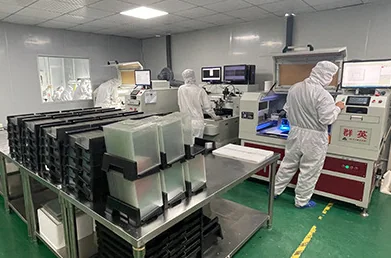
For processes sensitive to dust or contamination, ask what environmental controls apply at each operation. Request the documented room classification, monitoring method, filter maintenance records and gowning or material-handling rules relevant to that process. A clean-looking room photo does not establish a classification or show that controls are maintained.
3. Ask how quality is checked at each stage
Request examples of the supplier’s incoming, in-process and outgoing inspection plans. Confirm that acceptance criteria are defined for the actual product and drawing revision, and ask how nonconforming material is identified, contained and dispositioned.
- Incoming inspection: which purchased materials and components are checked, and against what requirements?
- In-process inspection: which critical operations are monitored, how often, and what happens when a result is out of limit?
- Outgoing inspection: which visual, electrical, touch-function and packaging checks are required for shipment?
4. Verify traceability and change control
Ask for a sample traceability record. It should show what can be linked from a finished unit or lot to material batches, production dates, equipment or process records, inspection results and the responsible release record. Also ask how drawing, material, process, firmware or component changes are reviewed and communicated.
5. Review validation evidence that matches your risk
Choose validation evidence based on the intended use. This may include dimensional reports, touch-function checks, optical inspection, environmental or mechanical test reports, and reliability data. Check the sample size, test conditions, acceptance criteria, product revision and whether the report represents the production-intent configuration.
6. Use a sample to test the working relationship
Provide a controlled drawing and clear requirements, then review how the supplier handles questions, deviations and sample feedback. A sample evaluation should use the same key interfaces and mechanical constraints planned for the equipment. Record open points and agree who owns each verification task before tooling or production.
Questions to include in an RFQ
- Which manufacturing and integration steps are performed at your facility?
- Can you provide process-flow, inspection-plan and traceability examples for a comparable product?
- Which tests are performed internally, and which are performed by an external laboratory?
- How are product changes, nonconformances and corrective actions documented?
- What information or customer approvals are required before a design or material change?
Preparing a supplier review?
Share the product form, drawing revision and project requirements for a focused discussion.